
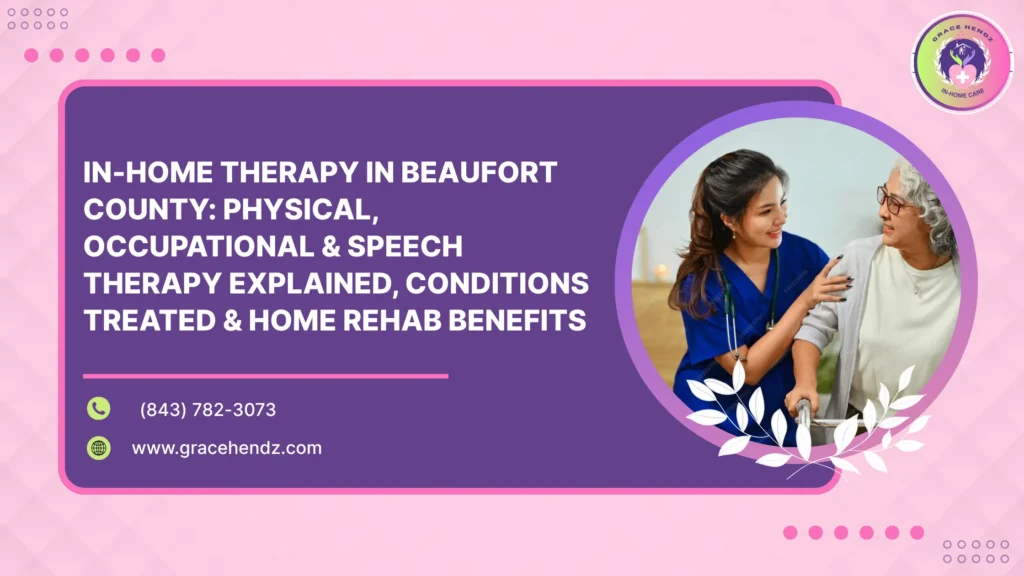
Recovering from surgery, illness, injury, or mobility decline often becomes more manageable when therapy happens in a familiar environment. Many families across Beaufort County are now choosing in-home rehabilitation services because they allow patients to receive personalized support without the stress of traveling to clinics multiple times each week. Physical therapy, occupational therapy, and speech therapy each serve different purposes, yet they work together to improve independence, mobility, communication, and daily function. With structured in-home support, individuals can continue rehabilitation while remaining safe and comfortable at home.
Why In-Home Therapy Is Becoming More Popular in Beaufort County
Home-based rehabilitation allows patients to recover in an environment that reflects their real daily routine. Therapists can identify mobility obstacles, safety risks, and practical challenges directly inside the home, leading to more personalized care plans. Families in Beaufort County also appreciate the convenience of avoiding transportation difficulties, especially for seniors, individuals recovering from surgery, or patients with chronic medical conditions. Therapy delivered at home often improves consistency because appointments become easier to maintain.
Improved comfort: Patients often feel less stressed during therapy sessions at home
Better safety awareness: Therapists can evaluate real household mobility challenges
Reduced travel strain: Families avoid repeated transportation scheduling and waiting rooms
What Physical Therapy Services Include at Home
Physical therapy focuses on restoring strength, movement, balance, and coordination. In-home sessions are tailored to the patient’s mobility level and recovery goals. Therapists work directly within the home to improve walking, transfers, and overall physical function.
Patients recovering from orthopedic surgery, stroke, falls, or hospitalization commonly benefit from physical therapy services. Exercises are adapted to available home space while still maintaining structured rehabilitation goals.
Balance training: Helps reduce fall risks and improve stability
Strength exercises: Support muscle recovery and endurance
Mobility improvement: Assists with walking, standing, and safe movement throughout the home
Families seeking personalized recovery support can explore Rehabilitation Therapy Services designed for in-home care.
How Occupational Therapy Supports Daily Independence
Occupational therapy helps patients regain the ability to complete everyday activities safely and independently. This includes dressing, bathing, meal preparation, grooming, and other daily tasks that may become difficult after illness or injury.
Therapists evaluate how individuals interact with their home environment and recommend practical modifications that improve safety and accessibility. Small adjustments can significantly improve confidence and reduce dependency on caregivers.
Adaptive techniques: Help simplify everyday activities
Home safety guidance: Identifies risks that affect independence
Functional training: Improves coordination for daily routines
Occupational therapy often works alongside Personal Care Services to create stronger daily support systems for clients needing assistance at home.
What Speech Therapy Helps Treat in Home Care Settings
Speech therapy addresses communication, swallowing, memory, and cognitive challenges that may develop after stroke, neurological conditions, injury, or age-related decline. In-home speech therapy allows therapists to evaluate communication in real-life settings where patients interact daily.
Speech therapists may help patients improve speech clarity, strengthen swallowing muscles, or develop cognitive exercises that support memory and problem-solving skills. Therapy plans are adjusted gradually based on progress.
Speech improvement: Supports clearer communication abilities
Swallowing therapy: Helps reduce eating and drinking complications
Cognitive support: Assists with memory and processing skills
Patients receiving Disability & Cognitive Support may also benefit from integrated speech therapy programs.
Conditions Commonly Treated With In-Home Therapy
Many health conditions require structured rehabilitation after hospitalization or functional decline. In-home therapy helps patients continue recovery safely while reducing unnecessary facility visits.
Common conditions treated through home rehabilitation include orthopedic injuries, neurological disorders, mobility decline, chronic illnesses, and post-surgical recovery. Therapy plans are individualized based on diagnosis and long-term goals.
Stroke recovery: Improves movement, communication, and coordination
Joint replacement recovery: Helps rebuild mobility after surgery
Parkinson’s disease: Supports balance and movement management
Arthritis: Improves flexibility and pain management techniques
According to the Centers for Disease Control and Prevention, falls remain one of the leading causes of injury among older adults, making rehabilitation and mobility support increasingly important for aging populations.
Step-by-Step Process for Starting In-Home Therapy
Beginning therapy at home typically follows a structured care process that ensures treatment aligns with the patient’s medical condition and rehabilitation goals. The process is designed to remain flexible while still maintaining clinical consistency.
Therapists coordinate with physicians, caregivers, and family members to create individualized treatment plans that fit the patient’s home environment and schedule.
Initial evaluation: Reviews medical history, mobility, and therapy needs
Goal development: Establishes measurable recovery objectives
Treatment scheduling: Creates consistent therapy routines at home
Progress monitoring: Adjusts care plans based on recovery milestones
Many patients combine rehabilitation support with In-Home Health & Care Services to ensure a more complete recovery.
Comparing In-Home Therapy to Outpatient Rehabilitation
Both home therapy and outpatient rehabilitation provide valuable care, but the right option depends on the patient’s condition, mobility, and access to transportation. Home therapy often becomes the preferred option when travel causes physical strain or raises safety concerns.
Outpatient clinics may offer larger equipment setups, while home therapy provides personalized attention inside the patient’s living environment. Many families in Beaufort County prefer home-based care during the early stages of recovery.
In-home therapy: Personalized treatment within the patient’s daily environment
Outpatient therapy: Clinic-based sessions with additional equipment access
Hybrid care: Some patients transition between both options during recovery
Home Therapy Benefits for Seniors and Aging Adults
Older adults often achieve better rehabilitation outcomes when therapy takes place in familiar surroundings. Home environments reduce confusion, physical stress, and fatigue that can sometimes accompany clinic visits.
Therapists can also monitor how aging-related conditions affect daily mobility within the actual living space. This creates more realistic rehabilitation goals that align with long-term independence.
Reduced fall risks: Therapists identify hazards directly inside the home
Better routine consistency: Easier scheduling improves appointment attendance
Family involvement: Caregivers can observe therapy sessions and recommendations
Families needing additional support may combine therapy with Skilled Nursing services for medical oversight during recovery.
Transportation Challenges That Home Therapy Helps Eliminate
Traveling to multiple weekly appointments can become difficult for individuals with mobility limitations, chronic pain, or post-surgical restrictions. In-home rehabilitation removes transportation barriers that often interrupt consistent recovery.
Patients in Beaufort County who already rely on mobility assistance or caregiver transportation may experience fewer missed sessions when therapy is delivered directly at home.
Reduced caregiver strain: Families avoid repeated transportation coordination
Lower physical exhaustion: Patients conserve energy for rehabilitation exercises
Improved appointment consistency: Fewer cancellations caused by transportation issues
For individuals requiring medical transportation, Non-Emergency Medical Transportation (NEMT) may also assist with healthcare appointments outside the home.
Mistakes Families Should Avoid During Home Rehabilitation
Recovery often improves when therapy routines remain consistent and structured. However, some families unintentionally slow progress by overlooking important rehabilitation recommendations or creating unrealistic expectations.
Therapists provide exercises and guidance that should continue between appointments whenever appropriate. Consistency and patience remain critical throughout the recovery process.
Skipping exercises: Reduces therapy effectiveness between visits
Ignoring safety recommendations: Increases fall and injury risks
Expecting immediate results: Rehabilitation progress usually happens gradually
Local Rehabilitation Support Across Beaufort County, SC
Residents throughout Beaufort County benefit from increasing access to in-home rehabilitation services that support aging in place and long-term independence. Local home care providers understand the transportation, mobility, and healthcare challenges many families face across the region.
From Bluffton to Hilton Head Island and nearby communities, home therapy services allow patients to recover without leaving familiar surroundings. Local providers also coordinate care with physicians, hospitals, and caregivers to ensure continuity of care during recovery.
Families can explore available coverage areas through the Service Areas Page to learn more about in-home care availability across Beaufort County and surrounding communities.
For community updates and local engagement, visit the official Grace Hendz In-Home Care Facebook Page.
Frequently Asked Questions About In-Home Therapy in Beaufort County
Many families have questions before starting home rehabilitation services. These answers help clarify how in-home therapy works and when it may become beneficial.
What conditions qualify for in-home therapy services?
Patients recovering from surgery, stroke, injury, neurological conditions, arthritis, or hospitalization commonly qualify for home therapy services. Care plans are personalized based on mobility, medical needs, and physician recommendations.
Can physical, occupational, and speech therapy be combined?
Yes, many patients receive multiple therapy services together, depending on their condition and rehabilitation goals. Combining therapies often improves recovery outcomes and daily independence.
Is in-home therapy only for seniors?
No, in-home therapy supports adults of different ages recovering from injury, illness, surgery, or disability-related conditions. Services are adjusted based on each patient’s physical and cognitive needs.
How long does home rehabilitation usually last?
Recovery timelines vary depending on the condition being treated, overall health, and consistency with therapy. Some patients require short-term rehabilitation, while others benefit from ongoing therapy support over several months.
Personalized In-Home Therapy Services in Beaufort County
Recovery becomes more manageable when therapy is delivered consistently, flexibly, and with personal attention. In-home rehabilitation allows patients to improve mobility, communication, and independence while remaining comfortable in familiar surroundings.
GRACE HENDZ IN-HOME CARE provides compassionate home-based rehabilitation support throughout Beaufort County and surrounding areas. Whether you need physical therapy, occupational therapy, speech therapy, or coordinated in-home care services, personalized support is designed around your recovery goals and daily routine.
📍 Address: 487 Bells Highway, Suite A, Walterboro, SC 29488
📞 Phone: (843) 782-3073
📧 Email: GraceHendz23@gmail.com
Families looking for dependable rehabilitation support can contact GRACE HENDZ IN-HOME CARE to learn more about customized in-home therapy solutions.